What Is The Skydio X10?
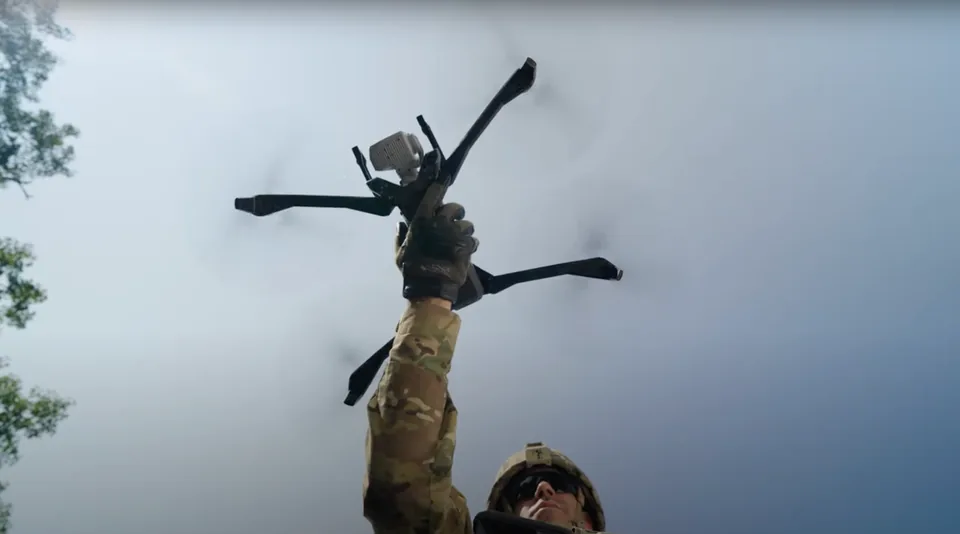
The Skydio X10 is an autonomous, sensor-packed drone built by US drone maker Skydio for enterprise inspection, public safety response, and defense missions rather than hobbyist flying. It uses six 32MP navigation cameras plus a dedicated thermal sensor to fly itself around obstacles, a capability Skydio calls autonomy-first flight instead of manual piloting.
Skydio pivoted away from the consumer camera-drone market it started in, and the X10 is the clearest sign of that shift: it ships in an NDAA-compliant configuration, is designed and assembled in the United States, and is sold mainly to police departments, utilities, industrial inspectors, and military and government buyers rather than everyday consumers.
This page covers the X10's specs, its price and the X10D defense variant, the Skydio Dock docking system, and the funding and China-sanctions story behind why Skydio bet its whole business on this drone.
| Attribute | Skydio X10 | Note |
|---|---|---|
| Max flight speed | 45 mph | Manufacturer spec |
| Max flight time | 40 minutes | Per battery |
| Deployment time | Under 40 seconds | From case or Dock |
| Cameras | Six 32MP nav cams, 50MP wide, 64MP narrow, thermal | 360-degree obstacle avoidance |
| Weight | 5.49 lbs (2.49 kg) max takeoff | Folded: 13.8 x 6.5 x 4.7 in |
| Rating | IP55 | Dust and water resistant |
Skydio X10 Price And The X10D Defense Variant
The Skydio X10D, the NDAA-compliant defense and public-safety configuration, is priced at $16,000 for the drone itself. That figure covers the aircraft; agencies typically add batteries, controllers, and the Dock system separately, which is why total program costs run well above the base unit price.
The Skydio Dock for X10, the automated charging and launch station that lets an X10 sit in the field and respond to calls without an operator physically present, is priced far higher, with retailer listings showing a Dock-plus-drone kit near $57,700. Departments can network multiple Docks together in what Skydio calls a hive for continuous, overlapping coverage.
These are US list prices for enterprise and government buyers, not consumer retail prices. Search interest in "skydio x10 price" is real and recurring, which tracks with how often police and utility budget approvals reference the X10D and Dock together rather than the drone alone.
- Skydio X10D (drone only): $16,000.
- Skydio Dock for X10 (dock + drone kit, retailer listing): about $57,744.
- Multi-Dock "hive" deployments add per-unit cost for wider coverage.
- Budgets should include batteries, training, and software subscription, not just the sticker price.
Skydio Dock, Autonomy, And Public Safety Use
The Dock is what turns the X10 from a drone you fly into a Drone as First Responder (DFR) system: it sits outdoors, charges the aircraft, and can launch it in under 20 seconds after a 911 call or alarm trigger, with the drone flying itself to the location using onboard obstacle avoidance rather than a remote pilot threading it through streets and power lines.
This autonomy focus is why the X10 shows up in police, fire, and airfield-security programs rather than just aerial photography work. New Zealand's Royal New Zealand Air Force began running the X10 in daily security patrols and airfield monitoring during early 2026 trials, and US police departments use the same Dock model for first-responder dispatch.
The autonomy story on the X10 mirrors the broader push toward self-directed field robots we track in our Field AI autonomy review and our robotics news hub, where sensor-driven navigation is replacing manual remote control across categories, not just drones.
Skydio's Funding, Valuation, And China Sanctions
Skydio closed a Series F round in April 2026 that raised additional capital and valued the company at roughly $4.4 billion, alongside a separate announcement of a planned $3.5 billion investment in expanding US-based manufacturing. Reporting describes a bookings pipeline near $1.2 billion, with defense contracts making up more than half of it, underscoring how far the company has moved from its consumer-camera-drone roots.
In October 2024, China placed Skydio and its CEO under sanctions after the US approved defense assistance to Taiwan and Skydio sold drones to Taiwan's National Fire Agency, then restricted Chinese suppliers from providing components Skydio's battery supply chain depended on. Skydio has publicly framed its US manufacturing buildout as a direct response to that supply squeeze, not just a defense-market bet.
The China angle also explains Skydio's rivalry with DJI: DJI reportedly tried to acquire Skydio back in 2014, and Skydio has since built its entire enterprise and defense strategy around NDAA compliance and non-Chinese hardware, positioning the X10 as the drone US agencies can buy when a Chinese-made drone like a DJI model is restricted or banned outright.
Skydio X10 Vs Consumer And Rival Autonomous Systems
The X10 is not aimed at the same buyer as a consumer camera drone. It is closer in spirit to autonomous ground and aerial systems built for repeatable, mission-driven work, the same category covered in our military robot dogs guide and our broader look at Chinese-made robotics supply chains in the Chinese humanoid robots buying guide, since export controls and national-origin rules shape both markets in similar ways.
Buyers comparing the X10 against DJI's enterprise line are really comparing two different things: raw price and camera specs on one side, and NDAA compliance plus onboard autonomy on the other. For US government and many enterprise buyers, the compliance requirement decides the shortlist before specs are even compared.
For a wider view of how autonomy is reshaping physical systems beyond drones, see our humanoid robot comparison, which tracks the same self-navigation trend in ground robots.
Skydio X10 vs DJI Matrice 350 RTK
Skydio X10 wins on autonomy and compliance; DJI's Matrice 350 RTK wins on payload capacity and price. Neither drone is a straight upgrade over the other, because they are built for different missions.
The X10D's $16,000 price covers a lighter, camera-and-thermal-focused airframe at 5.49 lbs max takeoff, built to fly itself through obstacle-dense environments using six 32MP navigation cameras. DJI's Matrice 350 RTK weighs more and carries a 9.2 kg maximum takeoff weight, built to swap between mapping, thermal, and LiDAR payloads on the same enterprise airframe rather than lead with onboard autonomy.
The deciding factor for most US government and public-safety buyers is not on this table at all: DJI's unmanned aircraft systems were added to the FCC's Covered List in December 2025, which blocks new DJI equipment from fresh US authorization. That single fact rules the Matrice out for any agency requiring Covered-List-clear hardware, regardless of how the specs compare.
| Factor | Skydio X10 (X10D) | DJI Matrice 350 RTK | What it means for a buyer |
|---|---|---|---|
| Price (drone only) | $16,000 | Lower than the X10D; DJI does not publish US list pricing, check current enterprise dealer quotes | DJI's enterprise line is the cheaper hardware buy before compliance is considered |
| Max takeoff weight | 5.49 lbs (2.49 kg) | 9.2 kg (about 20.3 lbs) | The Matrice carries far more payload, useful for stacking multiple sensors on one flight |
| Max flight time | 40 minutes per battery | Up to 55 minutes in lab conditions, no payload, windless | DJI's published figure is longer, though both are lab or per-battery numbers, not guaranteed field endurance |
| Autonomy | Autonomy-first flight; flies itself around obstacles using six 32MP navigation cameras | RTK-precision navigation with pilot input; not built around autonomous obstacle flight the way the X10 is | The X10 is the stronger pick for GPS-denied or obstacle-dense missions flown without a dedicated pilot |
| US compliance status | NDAA-compliant, assembled in the United States | Added to the FCC's Covered List in December 2025; new units blocked from fresh US authorization | Skydio is the only one of the two that a Covered-List-restricted agency can currently buy new |
Bottom Line
The Skydio X10 is Skydio's flagship autonomous drone, priced at $16,000 for the NDAA-compliant X10D and paired with a Dock system for hands-off first-responder deployment. It sits at the center of Skydio's pivot from consumer cameras to a defense-and-enterprise business backed by a $4.4 billion valuation, a $3.5 billion US manufacturing plan, and a supply chain rebuilt after China sanctioned the company in 2024. Buyers should budget for the Dock and training on top of the drone's base price, not just the headline number. For the wider field of DJI replacements beyond Skydio, see DJI drone alternatives.
Compare the X10's autonomy approach with other self-navigating field robots in our Field AI review and military robot dogs guide, and watch the robotics news hub for Skydio's next funding or defense-contract update.
FAQs
What is the Skydio X10?
The Skydio X10 is an autonomous drone built by US drone maker Skydio for enterprise inspection, public safety, and defense use, using onboard cameras and sensors to fly itself around obstacles instead of relying only on a manual pilot.
How much does the Skydio X10 cost?
The NDAA-compliant Skydio X10D is priced at $16,000 for the drone alone. The Skydio Dock automated charging and launch station adds significant cost, with a Dock-plus-drone kit listed near $57,744 at retail.
What is the Skydio Dock?
The Skydio Dock is an outdoor charging and launch station that lets an X10 sit in the field and take off autonomously in under 20 seconds after a call, used mainly for Drone as First Responder programs at police and fire departments.
Why did China sanction Skydio?
China placed Skydio and its CEO under sanctions in October 2024 after the US approved defense assistance to Taiwan and Skydio sold drones to Taiwan's National Fire Agency, then restricted component suppliers Skydio's manufacturing depended on.
How much is Skydio worth?
Skydio's April 2026 Series F round valued the company at roughly $4.4 billion, alongside a separate plan to invest $3.5 billion in expanding its US-based manufacturing.
Is the Skydio X10 or DJI Matrice 350 RTK better?
It depends on the mission and the buyer's compliance requirements. The Matrice 350 RTK carries more payload and flies longer in lab tests, but DJI's unmanned aircraft systems were added to the FCC's Covered List in December 2025, blocking new units from US authorization. The X10 costs more per drone but is NDAA-compliant and built around autonomous obstacle flight, which is why most US government and public-safety buyers default to it over the Matrice today.