Verdict: who the Go2 is for
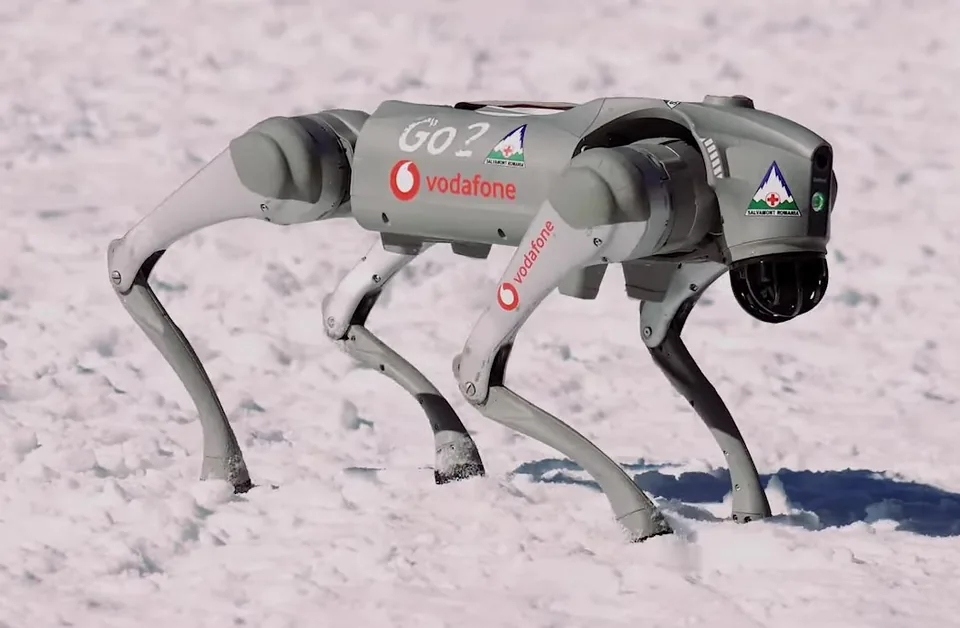
The Unitree Go2 is the most accessible robot dog Unitree sells. It is a four-legged, camera-and-LiDAR quadruped aimed at hobbyists, educators, and developers rather than at industrial buyers. At an entry price near $1,600 it is priced like a premium drone, not like a research platform, which is why it draws so much curiosity from first-time buyers.
For most people the honest answer is that the Go2 is a capable toy-plus-platform, not a household helper. It walks, climbs stairs, follows you, avoids obstacles, and streams video. It does not fetch objects, load a dishwasher, or hold a conversation the way marketing clips imply. If you want a programmable, agile robot to learn on or demo with, it delivers. If you want chores done, it will disappoint.
Buyers cross-shopping the humanoid side of the catalog should read our Unitree G1 review and the broader Chinese robot dogs guide. The Go2 is the natural first purchase before stepping up to a bipedal platform.
The Go2 trims: Air, Pro, Edu and Go2-W
Unitree splits the Go2 into consumer and developer tiers. The official store lists the Go2 Air from $1,600 and the Go2 Pro at $2,800. The Edu (education/enterprise) tier is not sold at a public checkout price — the product page shows "contact sales to get Go2 Edu price," so treat any Edu figure you see on reseller blogs as unofficial until Unitree confirms it.
The Air is the value trim. Reporting and reseller listings indicate it is speed-limited and drops several higher-end features such as full voice control, the 4G/GPS module, follow mode, and open developer access. The Pro restores full walking speed and those consumer features. The Edu tier is the one built for research: it exposes the low-level SDK, higher payload, and faster motion, which is why it costs multiples of the consumer trims.
There is also the Go2-W, a wheeled-leg variant that adds powered wheels at the feet for fast rolling on flat ground while keeping the legs for stairs and rough terrain. It is a separate purchase aimed at buyers who want speed and range on pavement. Confirm the exact Go2-W price and configuration with Unitree, as it is sold separately from the standard Go2 line.
At the time of writing, Unitree's official store does not list the Go2-W, and resellers list it from $13,999 for a standard unit to $20,695 and up for development versions. On Top 3D Shop, a single listing costs $13,999 with a five to ten business day lead time. Reseller Roboworks lists development-capable Smart, Ultimate, and Inspection variants starting from $20,695. Because the Unitree Go2-W product page publishes no price or edition list, ask the reseller which version (standard, Smart, Ultimate or Inspection) a quote covers.
The Go2-W weighs about 18 kg with its 15,000 mAh battery, which Unitree rates at 1.5 to 3 hours. It rolls on in-wheel motors with 7-inch pneumatic tyres at up to 2.5 m/s. Unitree cites an 8 kg payload (12 kg maximum) and a 35-degree slope limit. Unitree also says the Go2-W can climb onto or drop off obstacles under 70 cm. Sensors are a super-wide-angle 3D LiDAR and an HD wide-angle camera, with an 8-core CPU expandable with Orin NX. For heavier work, Unitree's store lists the Unitree B2-W at $100,000 at the time of writing. Our guide to robots that can climb stairs compares step limits across makers.
| Trim | Listed price | Positioning |
|---|---|---|
| Go2 Air | From $1,600 | Entry consumer; speed-limited, fewer features |
| Go2 Pro | $2,800 | Full-feature consumer; full speed, voice, follow |
| Go2 Edu | Contact sales (not publicly listed) | Developer/research; low-level SDK, higher payload |
| Go2-W | Not on Unitree's store; resellers list $13,999 to $20,695+ (at the time of writing) | Wheeled-leg variant for fast flat-ground travel |
Specs: payload, battery, range and sensors
The core Go2 hardware is shared across trims, with the Edu unlocking higher limits. Unitree lists a standard 8,000mAh battery at 28.8V, with an optional 15,000mAh ultra-long-life pack for buyers who need longer sessions. Whole-machine weight is about 15kg including the battery, and the standard payload is in the 7-8kg range depending on configuration.
Endurance is modest. Expect roughly one to two hours of typical use on the standard battery, more with the larger optional pack, and much less under continuous hard walking. This is normal for legged robots — the legs draw far more power than wheels — and it is the single biggest practical limit for buyers imagining all-day use. For a fuller price-versus-capability picture across the range, see our Unitree robot price guide.
On sensing, the headline feature is the 4D LiDAR L2 with roughly 360° by 96° hemispherical coverage, which the Go2 uses for obstacle avoidance and mapping. Combined with an onboard camera, it lets the robot navigate around people and furniture and build a spatial picture of its surroundings. Remote-control range is listed at over 30m for the standard controller.
- Battery: 8,000mAh (28.8V) standard; 15,000mAh optional
- Weight: ~15kg including battery
- Payload: ~7-8kg standard (higher on Edu; confirm with Unitree)
- Speed: 0-3.7 m/s on consumer trims; faster on Edu
- Endurance: ~1-2 hours typical; more with the large battery
- Sensing: 4D LiDAR L2, ~360°x96° coverage, onboard camera
- Control range: 30m+ with the standard remote
AI, mapping and developer access
The Go2's intelligence has two layers. Out of the box, the consumer app handles gaits, tricks, follow-me, and gesture or voice interaction on the higher trims. This is the layer most Air and Pro buyers actually use, and it needs no coding. The robot's LiDAR-based avoidance and mapping run underneath it automatically.
The second layer is developer access, and this is where trim choice matters most. The Edu tier exposes the low-level SDK and supports common robotics frameworks, which is what lets universities and companies write their own locomotion, navigation, and computer-vision code. Consumer trims deliberately restrict this. If your goal is real robotics work — ROS integration, custom autonomy, sensor fusion — you need the Edu tier, not the Air.
The Go2 is frequently used as a low-cost research platform precisely because that SDK access exists at a fraction of legacy-vendor pricing. Buyers weighing it against Western alternatives should read our Unitree vs Boston Dynamics comparison, which contrasts open developer access and price against Spot's enterprise support and ecosystem.
| Capability | Air | Pro | Edu |
|---|---|---|---|
| App control, gaits, tricks | Yes | Yes | Yes |
| Full voice / follow mode | Limited | Yes | Yes |
| LiDAR obstacle avoidance | Yes | Yes | Yes |
| Low-level SDK / ROS access | No | Limited | Yes |
| Custom autonomy development | No | No | Yes |
What it can and cannot do
It helps to separate demo capability from useful work. The Go2 is genuinely impressive to watch: it climbs stairs, recovers from shoves, navigates cluttered rooms, follows a person, and streams first-person video. Those are real, reliable behaviors, and they are why the robot photographs and films so well. As a teaching tool for locomotion, perception, and robotics coding, it is excellent value.
What it cannot do is the part buyers most often misjudge. The stock Go2 has no arm, so it cannot pick up, carry, or manipulate objects without an add-on. It is not a security guard — endurance and autonomy are too limited for unattended patrol. It is not an assistant for the elderly or a substitute for a service animal. Any clip implying household chores is showing either a different robot or a heavily staged, tele-operated setup.
Set expectations accordingly and the Go2 rarely disappoints; buy it expecting a home helper and it always will. Shoppers comparing it against other four-legged options should also look at the wider Chinese robot dogs landscape before committing.
- Can: walk, run, climb stairs, self-right, avoid obstacles
- Can: follow a person, stream video, run app tricks and gaits
- Can (Edu): host custom autonomy, mapping, and vision code
- Cannot: grasp or carry objects without an added arm
- Cannot: patrol unattended for long periods (endurance-limited)
- Cannot: perform home chores or elderly care
US availability and the 2026 import restriction
In July 2026 the US moved to restrict imports of certain new foreign-made robots, citing national-security concerns. The measure is best known for hitting humanoids, but the FCC Covered List behind it reaches "advanced robotic devices" broadly — quadruped robot dogs like the Go2 are covered too, not exempt for having four legs. What actually decides availability is authorization date, not the humanoid-versus-quadruped label.
The practical point is that models already holding US equipment authorization before the cutoff are generally treated as grandfathered — legal to import, sell, and use — while genuinely new, unauthorized models are the ones shut out. Reporting indicates the Go2 obtained its US authorization well before the 2026 action, which is why it has continued to appear on US reseller shelves. We are describing reported regulatory status, not giving legal advice.
Because this area is moving quickly, buyers should confirm current US availability with Unitree or an authorized reseller before ordering rather than assuming. For the wider policy picture, see our explainer on the US humanoid robot import ban, and cross-reference the Unitree price guide for landed-cost items like freight and customs.
| Question | Reported status (verify before buying) |
|---|---|
| Is the Go2 a humanoid? | No — it is a four-legged quadruped |
| Does the FCC rule cover quadrupeds? | Yes — robot dogs are in scope, not just humanoids |
| Pre-2026 US authorization? | Reported yes for the Go2 — the reason it still ships |
| Can US buyers still get one? | Confirm current availability with Unitree |
Bottom Line
Bottom line: the Unitree Go2 is the best-value entry point into legged robotics, starting near $1,600 for the Air and $2,800 for the Pro, with the Edu tier (contact sales) reserved for real developer work. Judge it as a programmable, agile platform and a demo machine, not as a household helper — it has no arm, limited endurance, and restricted SDK access on the cheaper trims. It is a quadruped, not a humanoid, and reporting indicates it holds pre-2026 US authorization, but availability is shifting fast, so confirm current US status with Unitree before you order.
Compare Go2 trims and current prices on the official Unitree store before you buy, and check landed cost with our Unitree price guide.
FAQs
How much is a Unitree Go2?
Unitree's store lists the Go2 Air from $1,600 and the Go2 Pro at $2,800. The Edu (developer) tier is quoted via sales rather than a public checkout price, so it is not publicly listed. Add freight, customs, and taxes to any figure, as these ship from China.
Is the Go2 worth it?
For hobbyists, educators, and developers, yes — it is the cheapest agile robot dog with real LiDAR avoidance and, on the Edu tier, full SDK access. For anyone expecting home chores or an unattended security guard, no; it has no arm and limited battery life.
Can you buy a Unitree Go2 in the US?
The Go2 is a quadruped, not a humanoid, and reporting indicates it held US equipment authorization before the 2026 import restriction, so it has continued to appear on US reseller shelves. Because the rules are changing, confirm current US availability with Unitree or an authorized reseller before ordering.
What is the difference between the Go2 and the Go1?
The Go2 is the newer generation and adds 4D LiDAR L2 sensing, improved battery and control range, a smarter app, and the Go2-W wheeled variant. The Go1 was Unitree's earlier consumer quadruped; the Go2 is the model currently sold on the official store.
Does the Go2 need coding to use?
No for basic use — the app handles walking, tricks, follow mode, and obstacle avoidance with no code. Coding only matters if you want custom autonomy or research work, which requires the Edu tier's low-level SDK; the Air and Pro restrict that access.