What Is Naio Technologies?
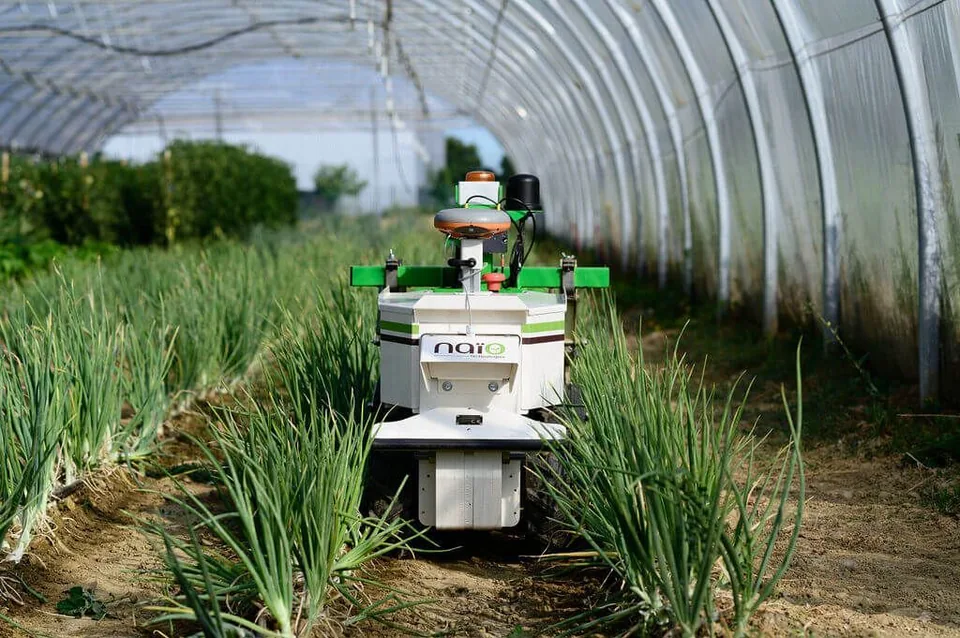
Naio Technologies is a French agricultural robotics company based in Escalquens, near Toulouse, founded in 2011 by engineers Gaëtan Séverac and Aymeric Barthes. The company builds a family of autonomous electric robots designed to mechanically weed row crops, market gardens, and vineyards without herbicide, replacing hand-weeding or chemical spraying with a machine that runs the rows itself.
Over more than a decade, Naio built out a product line covering different farm sizes and crops: Oz for small market gardens, Dino for large-scale vegetable rows, Ted for vineyards, and Orio as a newer, general-purpose mid-size platform. The robots are electric, run on GPS and camera-based row guidance, and are aimed at farms that want to cut herbicide use and manual labour.
This page covers what each Naio robot does, what is publicly known about pricing, and the company's 2025-2026 financial crisis, liquidation filing, and rescue, since that restructuring materially changed which products the company is still building.
| Robot | Target crop / user | Status |
|---|---|---|
| Oz | Market gardens, small vegetable farms | Core product post-rescue |
| Dino | Large-scale vegetable row crops | Legacy line; company refocused away from it in the 2025-2026 restructuring |
| Ted | Vineyards (autonomous straddle robot) | Core product post-rescue |
| Orio | Mid-size, multi-crop general platform | Introduced 2022; future roadmap unclear post-restructuring |
The Naio Robots: Oz, Dino, Ted, and Orio
Oz is Naio's smallest and best-known robot, a compact electric weeder built for market gardeners and small vegetable farms. It follows crop rows using cameras and RTK GPS, running mechanical tools between rows instead of spraying herbicide, and has been reported at roughly $30,000, though buyers should confirm current pricing directly with Naio or a distributor rather than treat that figure as a fixed retail price.
Dino is a larger mechanical weeding robot built for large-scale vegetable production, reported able to cover roughly 10 acres a day across 8 to 10 hours of autonomous operation. Reported pricing has ranged from roughly $200,000 to $300,000, positioning it well above Oz for commercial-scale vegetable growers rather than small farms.
Ted is Naio's autonomous straddle robot for vineyards, designed to work rows of vines for up to 8 hours a day without a driver. Naio has cited a long-term target price near €175,000, with a roughly 30 percent reduction proposed at commercial launch; treat any specific figure as a starting point to verify, not a locked price.
Orio, introduced at World Ag Expo in 2022, is a mid-size, 100% electric, multi-crop platform built to be a generalist base that farmers can outfit with different implements. Reported specs put it at about 821 kg, roughly 391 cm long, with up to 12 hours of autonomous run time on swappable batteries and a stated work rate up to 30 acres per 24 hours.
These robots sit inside the wider mechanical and laser weeding category covered in our weed control robots guide, alongside laser-based and spot-spray competitors. For the broader farm robotics picture, see our agricultural robots guide.
Naio's 2025 Insolvency and Search for a Buyer
Naio Technologies was placed in redressement judiciaire (French judicial receivership) on June 5, 2025, by the Toulouse commercial court, after a slowdown in agricultural equipment sales and a downturn in European viticulture left the company short of cash. Naio cited weaker farmer and winegrower appetite for capital-intensive, disruptive technology like autonomous robots during a difficult season for the wine sector specifically.
The receivership period ran through the second half of 2025 while the company searched for a buyer, with reporting from French agricultural trade press describing an urgent hunt for a repreneur (acquirer) to keep the vineyard and market-garden robot lines running. On October 28, 2025, the Toulouse court converted the receivership into full liquidation judiciaire, putting the company's survival in serious doubt.
This kind of capital-intensive-hardware insolvency is not unique to Naio; it reflects a broader pattern of pressure across agricultural and field robotics startups when equipment sales cycles slow, which is part of why we track company-level shifts like this in our robotics news hub alongside the robots themselves.
The 2025-2026 Rescue and Restructuring
Weeks after the liquidation ruling, Naio was rescued through a takeover by a newly formed company led by Matthias Carriere, previously Naio's sales director, as chief operating officer, and Antoine Monville, a Toulouse-based entrepreneur and industrialist, as chief executive. The deal was backed by a roughly €6.4 million financing plan involving the Occitanie region, Bpifrance, and impact investor Mirova.
The rescue retained 21 of the company's 49 employees and refocused the surviving business on what its new leadership called its strongest historical products, primarily Oz for market gardening and Ted for vineyards, rather than continuing every prior product line at the same scale. Reporting in early 2026 describes new leadership pushing field demonstrations and a progressive resumption of activity, with a stated goal of returning to break-even within about three years and reaching roughly €11 million in annual revenue by 2030, alongside a target of producing around 100 robots a year.
As of mid-2026, Naio describes itself as operating with roughly 55 employees across multiple continents. Given how recently the company went through liquidation and a change of ownership, treat any specific staffing, production, or revenue figure as the latest public statement rather than a permanent fact, and verify current status directly with Naio before making a purchasing or partnership decision.
Should You Buy a Naio Robot Today?
Naio's robots address a real, provable job: mechanical weeding that cuts herbicide use, which is the core value case covered generally in our weed control robots guide. But given the 2025 liquidation filing and 2026 ownership change, a prospective buyer should weigh vendor continuity risk more heavily than with an established, financially stable robotics supplier.
Before committing capital, confirm which products the restructured company is actively selling and supporting today (its public statements point to Oz and Ted as the priority lines), get a written service and parts-support commitment, and model the purchase against your real labour and herbicide costs using a framework like our robotics ROI guide rather than relying on vendor payback claims alone.
For farms further along the production chain, our harvesting robots guide covers the picking side of the field-robot market that Naio does not address, since Naio's robots are weeders, not harvesters.
Bottom Line
Naio Technologies is a pioneer in autonomous mechanical weeding, with Oz, Dino, Ted, and Orio covering market gardens, large vegetable rows, vineyards, and general multi-crop use respectively. The company was placed in judicial receivership in June 2025, converted to liquidation in October 2025, and rescued weeks later by new owners backed by Bpifrance, Mirova, and the Occitanie region, who have refocused the business primarily on Oz and Ted. Treat any pricing or specification figure as a starting point to verify directly, and weigh the recent insolvency into any purchase decision.
Compare Naio's weeding robots against the wider field-robot market in our weed control robots guide and agricultural robots guide, and model the numbers with our robotics ROI guide before you buy.
FAQs
What is Naio Technologies?
Naio Technologies is a French agricultural robotics company founded in 2011 in Escalquens, near Toulouse, that builds autonomous electric robots for mechanical weeding, including the Oz, Dino, Ted, and Orio robots.
What do the Naio Oz, Dino, Ted, and Orio robots do?
Oz is a compact weeder for market gardens; Dino is a larger robot for large-scale vegetable rows; Ted is an autonomous straddle robot for vineyards; and Orio is a mid-size, multi-crop general-purpose platform introduced in 2022.
Did Naio Technologies go bankrupt?
Naio was placed in judicial receivership (redressement judiciaire) in June 2025 and that receivership was converted to full liquidation (liquidation judiciaire) in October 2025. Weeks later, a new ownership group rescued the company with financing from Bpifrance, Mirova, and the Occitanie region.
Who owns Naio Technologies now?
Following the 2025 rescue, Naio is led by Antoine Monville as CEO and Matthias Carriere, formerly Naio's sales director, as chief operating officer, with financing support from Bpifrance, impact investor Mirova, and the Occitanie region.
How much does a Naio robot cost?
Reported figures have put Oz at roughly $30,000, Dino at roughly $200,000-$300,000, and Ted at a long-term target near €175,000 with a proposed launch discount. These are figures reported in coverage over time, not a current official price list, so confirm pricing directly with Naio before buying.