Deebot X12 OmniCyclone at a Glance
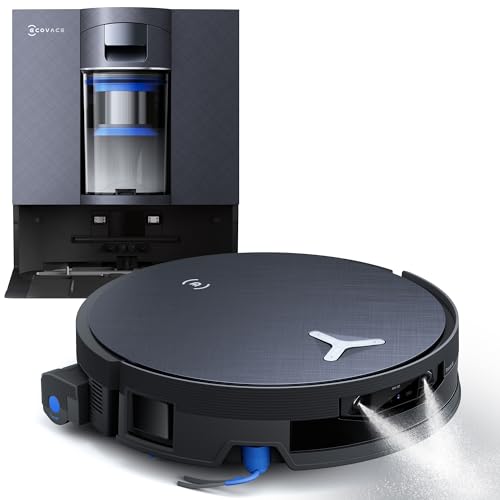
The Deebot X12 OmniCyclone's defining feature is its dock: rather than emptying the robot's bin into a disposable bag, the OmniCyclone dock uses a cyclonic separation system to empty debris into a bagless reservoir, cutting a recurring consumable cost that disposable-bag docks carry indefinitely.
Suction is rated at 22,000 Pa, with a 250 mL onboard dustbin and a battery rated for 200 minutes, translating to 1,277 sq ft of tested coverage per charge. Navigation runs on direct time-of-flight (dToF) LiDAR with multi-level mapping, meaning it can map and remember multiple floors of a home rather than relying on a single stored map.
Obstacle avoidance combines an AI camera, an LED, structured light, and 3D edge sensors, a broader sensor stack than many competitors in this price range run simultaneously.
- 22,000 Pa suction
- Bagless OmniCyclone dock (cyclonic separation, no disposable bags)
- dToF LiDAR navigation with multi-level home mapping
- AI camera, LED, structured light, and 3D edge sensors for obstacle avoidance
- Ozmo 3.0 roller mop at 220 RPM, 15 mm automatic lift over carpet
- $898.99 street price, discounted from $1,499.99
Test Scores Against the Category Average
Independent lab testing put the X12's overall score at 3.93 against a 2.58 category average, a wide margin across every measured category. Obstacle avoidance scored 4.69 against a 3.29 average, translating to 23 of 24 planted test obstacles successfully avoided, one of the stronger obstacle-avoidance results in its price tier.
Pet hair performance was the standout number: 100% flattened pet-hair pickup with 0% brush-roll tangling, against a 26% average tangle rate across the tested field. A perfect pickup score paired with zero tangling is an uncommon combination, since most robot vacuums trade one for the other, either picking up hair well but tangling on it, or avoiding tangles by under-engaging with longer hair.
Mopping scored 3.26 against a 2.39 average, driven by the FocusJet spraying system, which uses AI-based stain detection to pre-soak a detected mess before the mop pass reaches it rather than mopping every section identically. Carpet deep-cleaning came in at 76%, marginally below the 78% category average, and navigation efficiency scored 3.17 against a 3.05 average, both close to average rather than a strength or a weakness.
The FocusJet Mopping System
FocusJet's stain-pre-soak approach is a meaningful mopping-system difference from a flat, uniform spray pattern. By detecting a stain or spot with the onboard AI camera system and directing extra water there before the mop pad passes over it, the system targets its cleaning effort at the parts of a floor that actually need it rather than treating every square foot identically.
That targeted approach shows up in the water-residue data: the X12 left just 0.3 g of water residue after mopping, against a 1 g average, a meaningfully drier finish that matters for hardwood floors where standing moisture is the main long-term damage risk from any mopping robot.
The Ozmo 3.0 roller mop runs at 220 RPM and automatically lifts 15 mm over detected carpet, keeping the wet pad off rugs mid-cleaning run rather than dragging it across carpet fiber.
Why Obstacle Avoidance and Pet Hair Move Together Here
The X12's 23-of-24 obstacle avoidance score and its 100% pet-hair pickup are not unrelated results. Structured light and 3D edge sensors, the same sensor types driving the obstacle score, also help the robot judge exactly how close its brush head is to a floor surface and to loose hair strands, rather than relying on suction alone to pull hair into the roller.
That sensor overlap is a plausible explanation for the perfect 0% brush-roll tangle rate: a robot that can see and route around a snarl of pet hair before its brush head reaches it avoids the tangle in the first place, rather than needing an anti-tangle brush design to cut through hair the sensors failed to spot in advance. Anti-tangle bristle geometry, the more common fix on other robot vacuums, becomes a backup rather than the primary defense here.
The below-average carpet deep-clean score (76% against a 78% average) is the one metric that doesn't follow this pattern, and the gap is narrow enough that it likely traces to brush and suction-path design on carpet specifically rather than to any sensor shortfall, since the same robot's airflow-dependent metrics (pet hair, obstacle handling) both test well above average.
Charging Speed and Practical Ownership
PowerBoost fast-charging recovers 13% battery in 3 minutes, a meaningful convenience for a household that needs the robot back in service quickly between cleaning cycles rather than waiting through a full multi-hour charge cycle.
The 250 mL onboard dustbin is on the smaller side for a flagship, meaning more frequent auto-empty cycles at the dock, though the bagless OmniCyclone design at least removes the recurring cost of replacement bags that a similarly sized bagged dustbin would carry.
The X12's taller profile, a tradeoff of packing the OmniCyclone cyclonic-separation hardware into the robot body itself rather than only the dock, may block access under some low-clearance furniture that a slimmer flagship competitor could reach.
Bagless vs. Bagged Docks: What the Tradeoff Actually Costs
A bagless dock removes the recurring cost of replacement bags entirely, but it shifts maintenance from an occasional bag swap to periodically cleaning the cyclonic separator and reservoir itself, since dust and debris still accumulate somewhere even without a bag to hold it. Whether that trade favors a given household depends more on tolerance for that cleaning step than on raw convenience, since neither approach eliminates maintenance outright.
Long-term reliability data on cyclonic dock designs in robot vacuums is still thinner than the multi-year track record bagged docks have built up, simply because bagless flagship docks are newer to the category. That is not a reason to avoid the X12, but it is a reason to treat any five-year reliability claim about the OmniCyclone dock specifically as unproven until more units have been in the field that long.
Who Should Buy the Deebot X12 OmniCyclone
The X12 is a strong pick for a pet-owning household prioritizing zero-tangle pet hair pickup and dry, targeted mopping, at a $898.99 street price well below its $1,499.99 list price. Its 23-of-24 obstacle avoidance score also makes it a reasonable choice for a home with everyday floor clutter.
Households with mostly carpeted floors should weigh the X12's slightly below-average 76% carpet deep-clean score against alternatives in our robot vacuum buying guide that prioritize carpet performance specifically. Homes with very low-clearance furniture should also check the X12's body height against their specific furniture before buying.
A multi-story home is a specific case worth calling out separately: the X12's multi-level dToF LiDAR mapping means it can store and switch between floor maps without re-learning a level from scratch each time it's carried upstairs, a real convenience over single-map navigation systems that treat every relocation as a fresh start.
Bottom Line
The Ecovacs Deebot X12 OmniCyclone earns its flagship price on pet-hair performance (a rare perfect pickup score with zero tangling), obstacle avoidance, and a genuinely differentiated FocusJet mopping system that targets stains instead of spraying uniformly. Its carpet deep-cleaning and navigation efficiency both land close to category average rather than standing out, and its taller profile is a real tradeoff for low-clearance furniture. For a pet-owning household prioritizing hair pickup and dry mopping over deep carpet cleaning, it is one of the stronger flagship options tested this cycle.
Check the X12's body height against your lowest-clearance furniture before buying, since its OmniCyclone hardware makes it taller than some slimmer flagship competitors.
FAQs
What makes the Ecovacs Deebot X12 OmniCyclone's dock different?
It uses bagless cyclonic separation to empty the robot's dustbin, rather than a disposable bag, cutting the recurring consumable cost that bagged docks carry indefinitely.
How good is the Deebot X12 at pet hair pickup?
Independent testing scored it at 100% flattened pet-hair pickup with 0% brush-roll tangling, against a 26% average tangle rate across the tested field, an uncommon combination since most robot vacuums trade pickup rate for tangle resistance.
What is the FocusJet mopping system?
FocusJet uses the robot's AI camera to detect stains and pre-soak them with extra water before the mop pad passes over, targeting cleaning effort at dirty spots rather than spraying every section of floor identically.
Is the Deebot X12 OmniCyclone good on carpet?
It scores close to average on carpet deep-cleaning (76% against a 78% category average), making it a solid but not standout choice for carpet-heavy homes. Its strengths are pet hair pickup, obstacle avoidance, and mopping.