Tesla Optimus vs iRobot Roomba: The Verdict
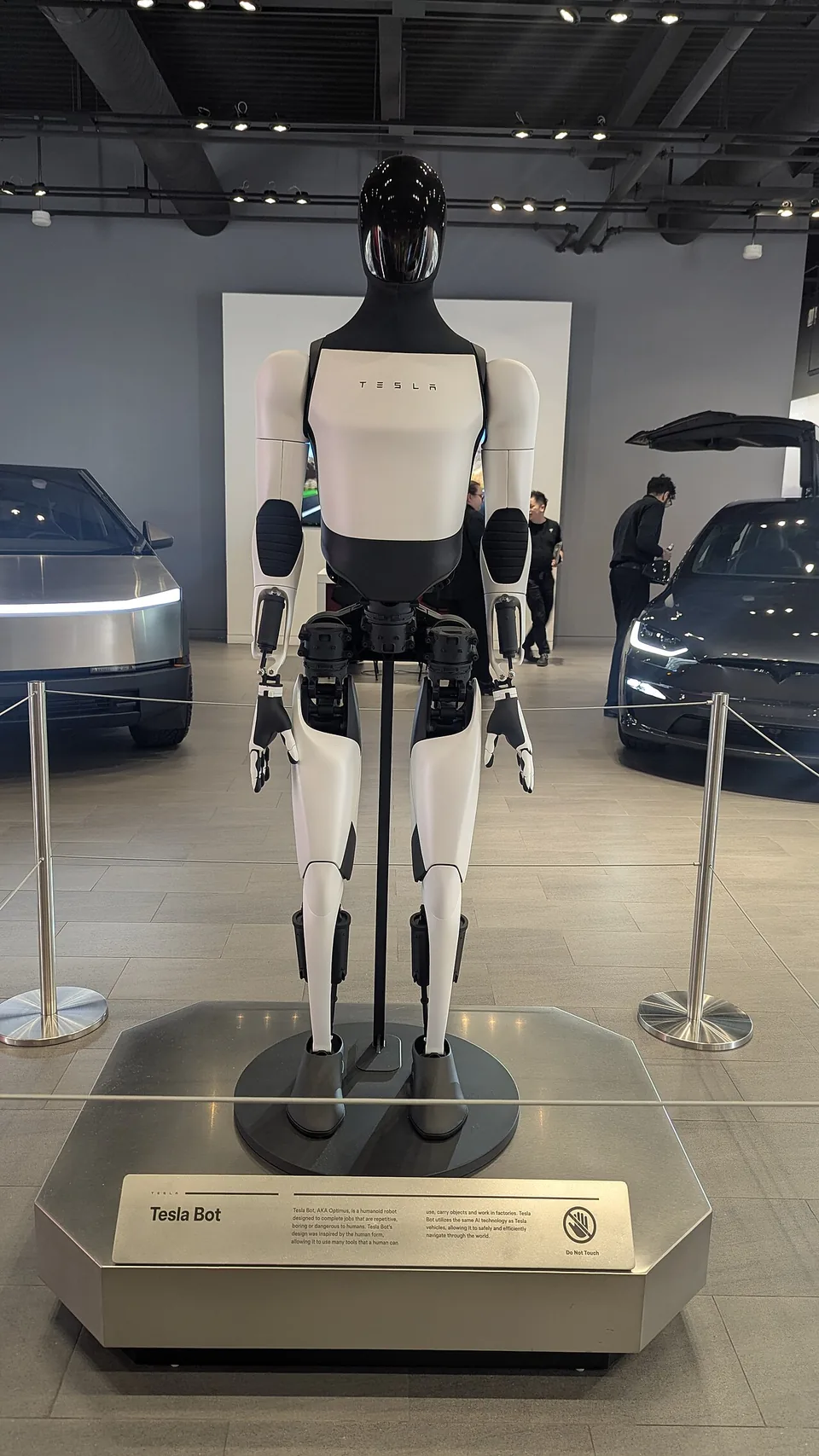
Tesla Optimus vs iRobot Roomba is best read as a comparison between a research-and-development platform and a finished consumer appliance, not a spec fight between two vacuums or two humanoids.
Roomba wins on every dimension that matters to a buyer shopping this month: published price, a checkout page, a support network, and years of real-home reliability data. Optimus wins on ambition and long-run scope, a general-purpose body meant to eventually handle far more than floor cleaning, but none of that is available to buy, lease, or pilot as a consumer today.
The clearest framing is task scope, not a winner. Roomba does one job well and ships now. Optimus aims at many jobs later and has not yet published the terms that would let a household compare it like a normal purchase.
| Factor | Tesla Optimus | iRobot Roomba |
|---|---|---|
| Public price | None published | $549.99–$1,399.99 MSRP across the j-series |
| Consumer order page | None | Yes, irobot.com and major retailers |
| Task scope | General-purpose, still in development | Single task: floor vacuuming, some models mop |
| Autonomy today | Demonstrated in controlled settings; not independently verified for home use | Fully autonomous scheduled cleaning, widely verified |
| Buyer readiness | Watchlist only | Ready to buy and use this week |
| Support and warranty | Not published for consumers | Published warranty, service network, spare parts |
Why This Comparison Is Really Two Different Questions
A shopper searching Tesla Optimus vs iRobot Roomba is usually asking one of two different things, and the answer depends on which one it is.
If the question is "which one can I buy and use in my home this month," the answer is Roomba, without qualification. If the question is "which company's robotics roadmap matters more for the future of home automation," that is a fair investor or research question, but it has no bearing on floor cleaning today.
Confusing the two questions is the most common mistake in coverage of this comparison. A humanoid robot being years away from a shipped, priced product is not a criticism of the engineering; it is simply a different stage of the product lifecycle than an appliance already in its sixth-plus hardware generation.
Task Scope: One Job Done Well vs Many Jobs Not Yet Proven
Roomba's task scope is narrow by design: it vacuums floors, and higher-tier models add mopping, both within a mapped, mostly flat indoor space. That narrowness is why it works reliably; a single-task robot has far fewer failure modes than a general-purpose one.
Optimus targets a much wider task set: walking on two legs, manipulating objects with hands, and eventually performing varied chores or factory work. That scope is the entire appeal of a humanoid form factor, and it is also why Optimus needs far more development time than a wheeled single-task appliance before it can be sold with a warranty.
Read the current state of that development on The Bot Scout's Tesla Optimus review, which tracks official Tesla demonstrations against the still-unpublished consumer terms.
Autonomy: Mapped Navigation vs Still-Unverified General Autonomy
Roomba's autonomy is mapped and bounded: LiDAR or camera-based navigation builds a floor plan once, then the robot repeats that plan on a schedule with a known, testable failure surface, such as getting stuck on a cable or a low chair leg.
Optimus autonomy claims come from Tesla's own controlled demonstrations, including stage events and factory floor clips, which show real capability under conditions Tesla itself set up. No independent lab has published a comparable home-reliability test for Optimus the way vacuum-testing outlets have run years of Roomba data across real households.
That gap between demonstrated and independently verified is the practical reason to treat any specific Optimus capability claim as provisional until it appears outside a company-run event, the same standard this site applies to Chinese humanoid demo footage.
Price and Availability: A Published MSRP vs No Public Number
iRobot publishes MSRP for every active Roomba model on its own product pages, running from $549.99 for the entry j5 to $1,399.99 for the flagship Combo j9+, per The Bot Scout's Roomba j-series review. Street prices at major retailers typically run below MSRP within months of release.
Tesla has never published a consumer MSRP, order page, or delivery timeline for Optimus. The Bot Scout's Tesla Optimus price tracking has logged the same "no public MSRP" status across every review cycle since this site began covering it, while Roomba pricing moves on an ordinary retail cycle in the same window. That gap, not a spec comparison, is the real story of this matchup.
Any number circulating online for an Optimus consumer price is speculation dressed as reporting. Treat estimates as estimates until Tesla itself publishes an order page.
When To Consider Each
Consider a Roomba now if you want automated floor cleaning this month, a published price, and a support network that already exists. Match the model to floor type and household size using the j-series review linked above rather than buying on suction numbers alone.
Consider tracking Optimus if your interest is the long-run trajectory of general-purpose home and industrial robotics, not a near-term purchase. Businesses already following Tesla's manufacturing roadmap have more reason to watch closely than a household shopping for chore help this year.
Do not treat Optimus as a Roomba substitute or a Roomba as an Optimus preview. A wheeled vacuum and a bipedal general-purpose robot solve different problems with different hardware, and neither roadmap tells you much about the other's timeline. For a like-for-like bipedal matchup, read XPeng IRON against Tesla Optimus.
Where To Buy
The models below are the ones we point readers at, listed in the order we would consider them.

iRobot Roomba j7+
Best for pet homesRoomba's obstacle-avoidance model, built around not driving through pet accidents. Self-empty base, and the widest availability of parts and service in the US.
Check price on Amazon- Front camera obstacle avoidance
- Dual rubber brushes
- Clean Base self-empty dock
- Best-supported brand for repairs and parts
- Genuinely good at avoiding pet messes
- Camera navigation maps slower than LiDAR
- Mopping needs a separate unit
Roborock S8 Max Ultra
Best overallThe flagship most other robot vacuums get measured against: LiDAR mapping, a dual rubber brush head that resists hair tangles, and a dock that empties the bin and washes and dries the mop on its own.
Check price on Amazon- LiDAR navigation
- Dual rubber brush head
- Self-empty, self-wash, self-dry dock
- Strongest all-round cleaning in the lineup
- Dock handles almost all maintenance
- Mature app and mapping
- Top-of-range price
- Large dock needs real floor space
Bottom Line
Tesla Optimus vs iRobot Roomba is a mismatch on purpose: one is a priced, buyable, single-task appliance, and the other is an unpriced, non-buyable general-purpose prototype. Buy a Roomba for floor cleaning today. Track Optimus if the humanoid robotics roadmap itself is the interest, not a household chore solved this year.
Shop Roomba by floor type and budget today, and track Optimus through official Tesla updates rather than resale rumors.
FAQs
Can I buy a Tesla Optimus like I can buy a Roomba?
No. iRobot sells Roomba models directly and through major retailers with published MSRP. Tesla has not published a consumer order page, price, or delivery date for Optimus, so it cannot be purchased, leased, or piloted by a consumer today.
Is Tesla Optimus better than a Roomba?
They are not comparable on the same scale. Roomba is a finished, reliable single-task appliance available now. Optimus aims at a far wider set of tasks but has not shipped a consumer product, so there is no current-generation performance to compare against Roomba's proven floor-cleaning record.
Will Tesla Optimus eventually replace robot vacuums?
Possibly, in theory, if Optimus reaches general-purpose home reliability at a competitive price, but that is speculative. A single-task appliance is usually cheaper and more reliable at its one job than a general-purpose robot attempting the same task, which is why purpose-built vacuums are likely to remain the practical choice for floor cleaning even after humanoids ship.
How much does iRobot's Roomba cost compared to Optimus?
Roomba's j-series runs $549.99 to $1,399.99 MSRP depending on model and dock features, per iRobot's own pricing. Optimus has no public MSRP, so there is no confirmed number to compare it against.
Primary Sources
Still deciding? Our top pick above, the iRobot Roomba j7+, is the one we'd point you at.