What Epson Robots Builds
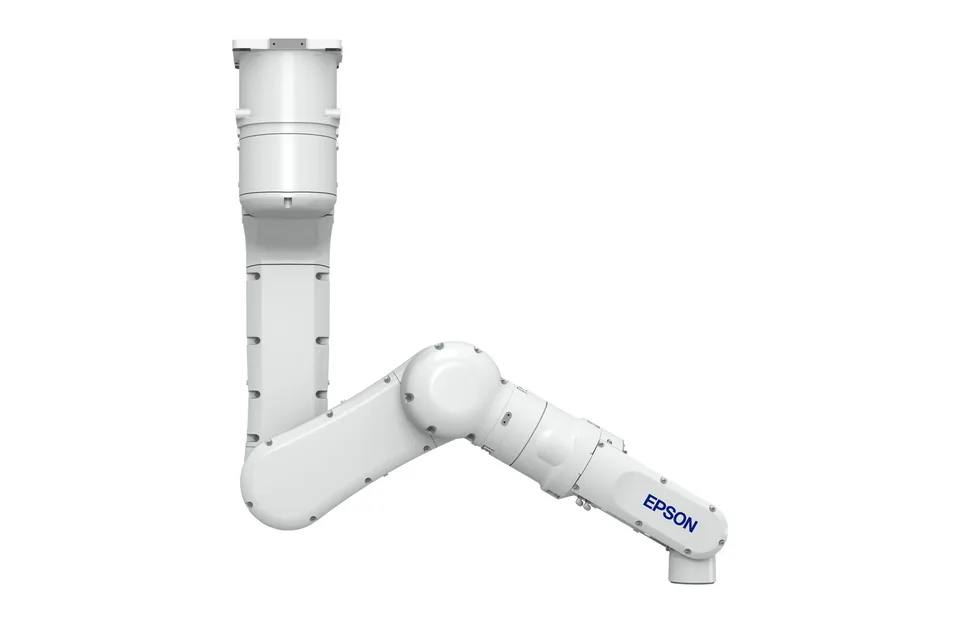
Epson Robots builds factory automation arms designed for high-speed assembly, pick-and-place operations, machine tending, and precision material dispensing. The company is best known for its extensive range of SCARA (selective compliance assembly robot arm) models, which dominate compact benchtop electronics manufacturing. Epson Robots also produces standard six-axis articulated industrial arms alongside collaborative robot arms, known as cobots, which incorporate power- and force-limiting features. Its product architecture centers on proprietary controller hardware, such as the RC-A1010 and RC700 series, paired with integrated software platforms like AX Portal and EPSON RC+. In addition to arm hardware, Epson Robots supplies factory vision systems, force sensors, and parts-feeding equipment. The company sells hardware directly and through a global network of certified automation system integrators and distributors. Systems are sold on a capital purchase model rather than a recurring robotics-as-a-service lease. Buyers typically purchase the arm, dedicated motion controller, cables, and development software as a bundled hardware package. Additional tooling, vision cameras, custom end effectors, and cell guarding must be quoted separately through third-party tooling partners or value-added distributors.
Epson Robots Products and Models
These are the Epson Robots models a buyer is most likely to be evaluating, and what each one actually does.
- AX6 Collaborative Robot — The AX6 is a six-axis collaborative robot designed for direct operation alongside human technicians without fixed perimeter fences, subject to a formal safety risk assessment. It features a 900 mm reach and handles a maximum payload of 6 kg. The arm pairs with the RC-A1010 controller and runs browser-based AX Portal software, allowing technicians to program motions using standard industrial tablets instead of purchasing proprietary teach pendants. Built-in arm buttons let operators teach waypoints directly by hand guiding.
- G-Series and LS-B SCARA Arms — Epson G-Series and LS-B SCARA arms deliver high-speed horizontal pick-and-place and mechanical fastening for assembly lines. The systems offer cycle times under 0.4 seconds and repeatability down to 0.005 mm, which prevents part misalignment during dense printed circuit board assembly. Ranging from 1 kg to 20 kg payload capacities, these arms use external controllers that support integrated machine vision, allowing the robot to locate disordered parts on moving conveyors without mechanical indexing.
- C-Series Six-Axis Industrial Robots — The C-Series consists of traditional high-speed six-axis articulated arms built for enclosure-based assembly, lab automation, and machine loading. With reaches ranging from 450 mm to 1,400 mm and payloads reaching up to 12 kg, these robots handle complex three-dimensional orientations in tight production cells. Their slim-arm geometry allows installation in compact work envelopes, minimizing the factory floor area required for safety perimeter fencing.
Epson Robots Pricing and Availability
Epson Robots sells industrial hardware through an authorized distributor and system integrator network rather than publishing fixed direct-to-consumer prices. Base hardware costs vary significantly across configurations. Entry-level SCARA setups typically begin around $10,000 to $15,000 for the arm and controller package, whereas six-axis industrial arms and collaborative units like the AX6 generally fall between $25,000 and $40,000 before peripheral integration. Total deployment investment is determined by end-of-arm tooling, safety scanners, part presentation fixtures, and custom engineering labor. Tooling and integration often double or triple the base arm cost for a turnkey production cell. Lead times for standard industrial models range from immediate regional distributor stock to eight to twelve weeks for specialized reach or cleanroom configurations. Epson Robots maintains major sales, service, and inventory depots in Japan, the United States, Germany, and China. Buyers work with regional distributors to secure application testing, formal purchase quotations, warranty terms, and field support agreements.
Who Epson Robots Products Are For
Epson Robots targets manufacturing engineers, original equipment manufacturers, and tier-one suppliers running high-throughput, repeatable assembly tasks in constrained factory footprints. Facilities producing microelectronics, medical diagnostic cartridges, automotive sub-assemblies, and consumer packaged goods gain the most value from Epson's high-speed kinematics and compact controllers. The AX6 specifically suits machine shops and packing stations where floor space cannot accommodate rigid steel fencing and where line operators must interact frequently with the work envelope. Conversely, Epson Robots is the wrong choice for heavy industrial facilities that require payloads exceeding 20 kg, such as automotive body welding, structural palletizing, or foundry metal handling. Operations with heavy payload demands should consider heavy-duty industrial robot lines from vendors like FANUC America, KUKA, or ABB Robotics. Operations that lack internal technical staff or system integration partners may also struggle with custom cell deployment, as Epson hardware requires proper electrical integration, risk assessments, and tool engineering.
- Verify workspace safety certification. Collaborative operation under ISO/TS 15066 requires an application-specific risk assessment to ensure tooling and pinch points do not exceed power and force limits.
- Evaluate programming skill requirements. The AX6 provides a no-code web interface and Python scripting, while traditional Epson industrial models require programming within the EPSON RC+ development environment.
- Budget for end-of-arm tooling and integration. The base robot arm excludes grippers, vacuum generators, part feeders, and safety interlocks, which routinely account for 50 percent of total cell capital expense.
- Assess cycle time against collaborative speed limits. Running an arm in collaborative mode restricts joint speeds to safe thresholds, which significantly extends cycle times compared to caged industrial arms.
- Check field service response times. Clarify spare parts availability, regional repair depots, and distributor engineering support in your operational geography before signing procurement contracts.
- Review controller connectivity protocols. Ensure the chosen controller supports your factory floor communication architecture, including EtherNet/IP, PROFINET, Modbus, or discrete input and output channels.
Epson Robots Alternatives
Robots and vendors a buyer typically cross-shops against Epson Robots.
- Universal Robots — Universal Robots produces the UR3e, UR5e, and UR7e collaborative arms, which directly rival the AX6 in machine tending and packaging. Universal Robots features an established third-party ecosystem of pre-certified grippers, but its units typically carry higher base retail hardware prices than comparable industrial SCARA hardware.
- FANUC America — FANUC America manufactures the CRX collaborative series alongside a vast catalog of industrial arms. FANUC models offer extensive industrial durability and nationwide field service networks. However, its software workflow follows traditional industrial robotics standards that require dedicated training for new plant technicians.
- Doosan Robotics — Doosan Robotics builds collaborative arms equipped with joint torque sensors in all six axes, providing sensitive force detection for delicate assembly. The Doosan lineup suits precision contact tasks, whereas Epson focuses on bridging traditional high-speed industrial kinematics with simplified web-based programming.
- KUKA — KUKA offers both industrial arms and the LBR iisy cobot series running the iiQKA operating system. KUKA systems excel in heavy automotive and industrial enterprise ecosystems, but they often present a steeper integration overhead for small and midsize assembly shops.
Recent news
A dated log of developments, each tied to its primary source.
- 2026-09 — Epson Robots launched the AX6 collaborative robot, featuring a 6 kg maximum payload, a 900 mm reach, and an RC-A1010 controller. The six-axis arm is equipped with power- and force-limiting safety features, end-of-arm teaching buttons, and browser-accessible no-code and Python programming environments. The Robot Report
- Expansion of web-based AX Portal software across legacy industrial SCARA and six-axis controllers.
- Third-party plug-and-play tooling ecosystem growth around Epson collaborative arm wrists.
- New higher-payload collaborative arm variants to bridge the gap between 6 kg assembly tasks and palletizing.
Bottom Line
Epson Robots remains a dominant supplier of high-speed, compact assembly robotics, built on decades of SCARA market leadership. The addition of the AX6 cobot shows the company adapting to modern machine shop demands by combining browser-based programming and Python scripting with industrial kinematic control. For electronics, medical, and light industrial manufacturers, Epson provides reliable, space-efficient hardware. Teams considering deployment must balance collaborative ease of use against cycle time limits and budget realistically for third-party tooling and safety verification.
Explore our comprehensive directory of industrial robot profiles and collaborative arm buyer guides on The Bot Scout.
FAQs
What is the payload and reach of the Epson AX6?
The Epson AX6 has a maximum payload capacity of 6 kg (13.2 lbs) and a maximum horizontal reach of 900 mm (35.4 in). These specifications make it suitable for light assembly, automated testing, pick-and-place packaging, and CNC machine tending. It connects to the compact Epson RC-A1010 motion controller for operation.
Can the Epson AX6 cobot operate without safety fencing?
Yes, the Epson AX6 can operate without perimeter barriers if a comprehensive risk assessment complies with ISO 10218 and ISO/TS 15066 standards. The robot features built-in force and power limiting. However, if sharp workpieces, dangerous tooling, or high operating speeds present physical risks, secondary safety scanners or barriers are required.
How do operators program the Epson AX6?
Operators program the AX6 through the browser-based AX Portal software using any standard industrial tablet or personal computer over Ethernet. The software supports visual no-code flowcharts for novice users alongside a customizable Python environment for complex workflows. In addition, physical buttons on the arm wrist allow direct manual hand-guide teaching.
What industries primarily use Epson Robots?
Epson Robots primarily serves electronics, medical device, biotechnology, automotive component, aerospace, plastics, and pharmaceutical manufacturing. The company's precision SCARA and six-axis arms excel in miniature mechanical assembly, lab automation pipetting, circuit board component insertion, optical inspection, and high-speed primary packaging.
What is the difference between Epson SCARA robots and the AX6 cobot?
Epson SCARA robots feature four axes of motion optimized for flat, planar high-speed pick-and-place tasks with rigid mechanical structures that require physical safety guarding. The AX6 is a six-axis articulated robot designed with power and force limiting, allowing spatial 3D orientation and safe collaboration alongside human workers.
Does Epson Robots offer a robotics-as-a-service subscription model?
No, Epson Robots does not sell its hardware under a direct robotics-as-a-service operational expenditure model. The company operates on a conventional capital equipment sales model through authorized factory distributors. Some certified third-party system integrators and equipment leasing firms may offer independent financing or operational lease agreements for complete turnkey workcells.